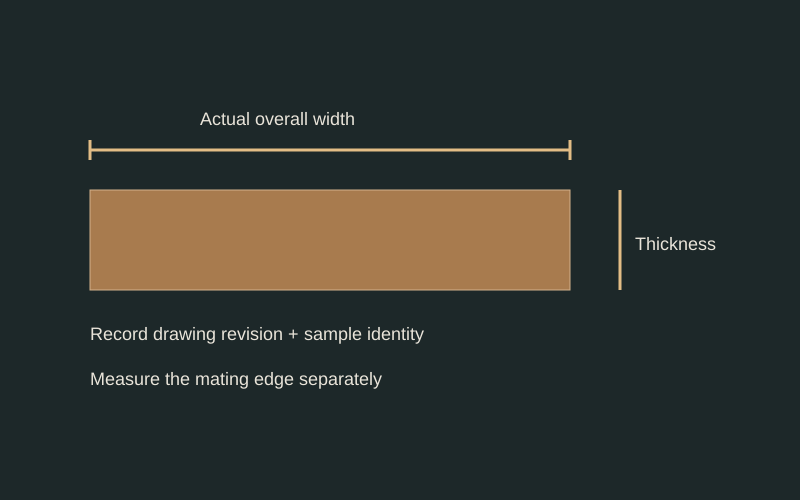
- The face alone does not identify the mating geometry.
- Record actual width and thickness separately from the nominal name.
- Replacement and submittal review also require edge detail, tolerances and a drawing revision.
Recover the most useful evidence
Begin with original drawings, invoices, packaging photographs, and unused offcuts. If a removed piece is available, label its original location and orientation. Photograph adjacent intact work before disturbing it. Keep the distinction between documented product identity and visual resemblance clear; similar grain, color, or nominal width cannot establish that two boards share a profile.
Measure the mating interfaces
Record the full section of the existing piece and proposed replacement using the same visible-face datum. Compare tongue position, groove geometry, rabbets, corner treatment, and back relief where relevant. Note which measurements come from worn or coated surfaces. Ask for a drawing or sample when a proposed product listing omits a dimension that controls the fit.
Check the surrounding assembly
Document how the board meets borders, adjacent courses, clips, and supports. Consider whether access permits the replacement to be installed using its intended method. A section that mates correctly on a bench may still require an undocumented alteration to enter the existing opening. Have that installation sequence reviewed before the material is ordered or modified.
Separate finish matching from geometry
Review appearance with an identified sample under representative viewing conditions. Record which differences are accepted, including texture and the transition to weathered material. Keep that approval separate from dimensional fit. Do not promise that a new piece will age into an exact match or treat a finish adjustment as a cure for an incompatible mechanical interface.
Make the decision traceable
Create a comparison sheet with existing, proposed, and unresolved columns. For each mismatch, specify whether the next action is another sample, a transition detail, or a revised repair scope. Retain rejected samples until the decision is settled. A clear record lets the installer know what was approved and prevents a visually similar substitute from arriving unreviewed.
Practical checklist
- Collect original identity records before guessing.
- Compare every mating feature from one datum.
- Review access and installation sequence.
- Approve appearance and fit as distinct decisions.
Worked example
Hypothetical example: a replacement matches the exposed face width but uses a different hidden clip groove. The owner requests a compatible profile sample or a reviewed repair detail instead of asking the crew to force the old clips into the new board.
Limits of this guide
A matching profile does not establish the condition or capacity of the existing assembly. USDA's material and fastening references provide context; a repair involving concealed deterioration or changed connections needs project-specific assessment.
Continue the decision
Measure a hardwood profile so another person can verify it
Read a tongue-and-groove section before ordering
Check a grooved edge against its intended clip
Profile explorer